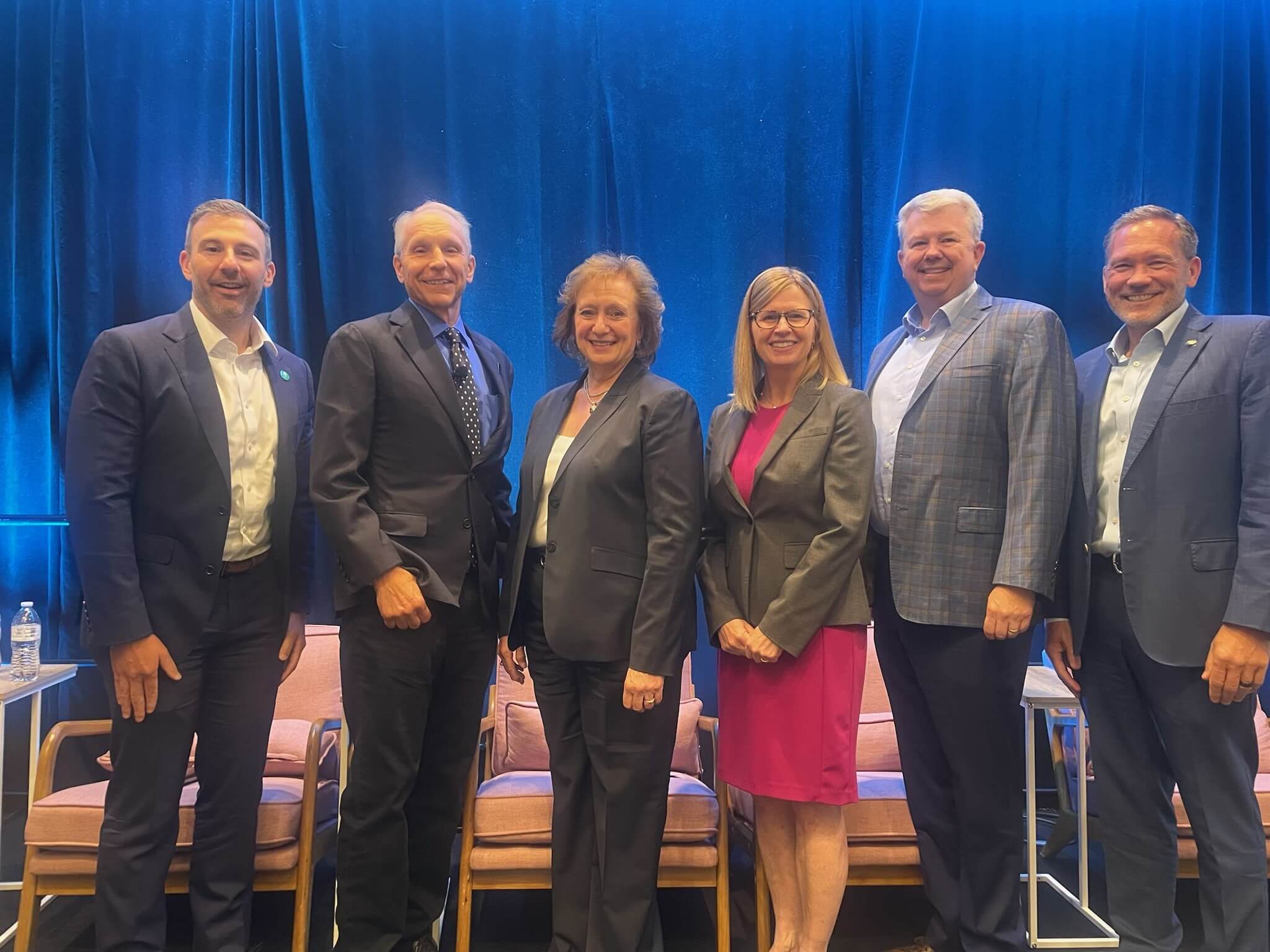



Can the U.S. standards community keep pace with the technologies it supports? That question framed the opening of the 2026 ANSI Innovation Summit, which launched on July 28 at the Grand Hyatt Denver with a fireside chat featuring standards developing organization (SDO) leaders and a Standards Lab showcasing new approaches to accelerating standards development.
Standards at the Speed of Innovation: A Fireside Chat with Standards CEOs, moderated by Dr. Laurie E. Locascio, ANSI president and CEO, brought together John Belcik, CEO, International Code Council (ICC); Peter Doty, interim COO and executive vice president, SAE International; Andrew G. Kireta Jr., president, ASTM International; Jeff Marootian, president and CEO, UL Standards & Engagement (ULSE); and Susan Miller, president and CEO, Alliance for Telecommunications Industry Solutions (ATIS). The conversation examined how development models can become more flexible, iterative, and responsive to rapid technological change while preserving the balance, consensus, and due process that are essential for voluntary consensus standards.
Panelists agreed that meaningful progress has been made—through digitization, earlier stakeholder engagement, pre-standardization work, and evolving participation models—but that development processes must continue to adapt. The discussion explored the tension between speed and deliberation, with panelists noting that risk and consequence should guide the pace of standards work. Examples ranging from electric vehicle charging to sustainable aviation fuel illustrated how market dynamics, safety considerations, and stakeholder readiness shape timelines. Adoption cycles, panelists observed, often extend well beyond publication, making early market engagement and complementary offerings, like training, certification, and digital tools, essential to timely uptake.
Engaging the next generation of standards professionals emerged as a shared priority. Speakers described mentorship programs, emerging leader councils, collegiate design competitions, and internship pipelines aimed at bringing technology-native talent into the community. They noted that while designated corporate standards roles are less common than in past decades, new participants increasingly arrive with strong technical expertise. On AI, panelists described a cautious yet proactive approach: experimenting with tools to improve efficiency and enhance user access to standards content while protecting intellectual property and preserving human oversight in the consensus process.
The afternoon Standards Lab: Testing New Development Approaches, emceed by Mary Saunders, ANSI senior vice president, government relations and public policy, featured four concrete initiatives from across the standards ecosystem.
Moderated Q&A explored how organizations define success for these efforts, how to manage stakeholder expectations and information overload, and how open source and formal standards communities can strengthen collaboration. Panelists pointed to ANSI’s Technology Consortium Council, formed in 2025, as an important venue for building bridges between consortia, open source communities, and formal SDOs.
ANSI thanks all speakers and attendees for participating in these sessions.