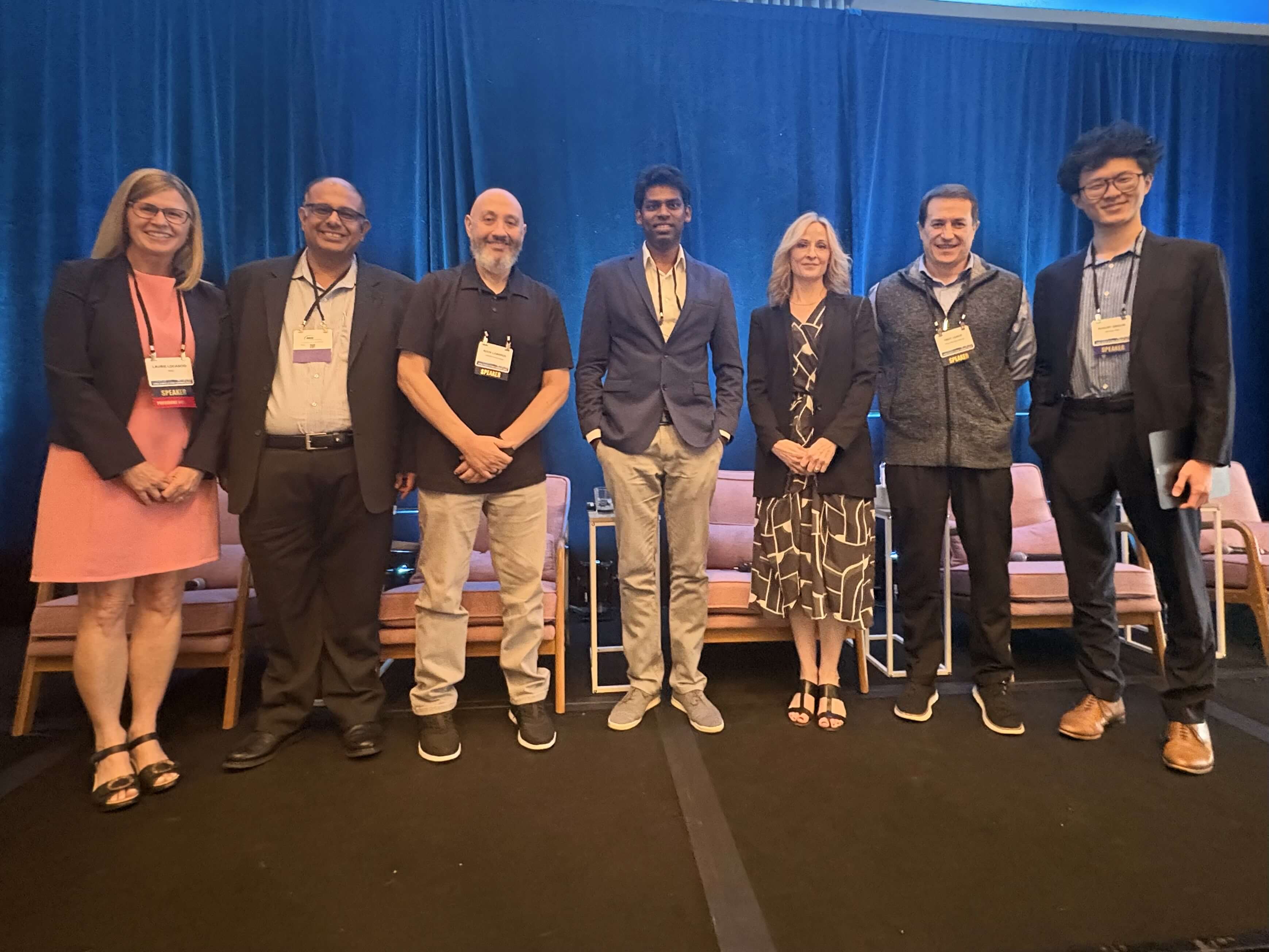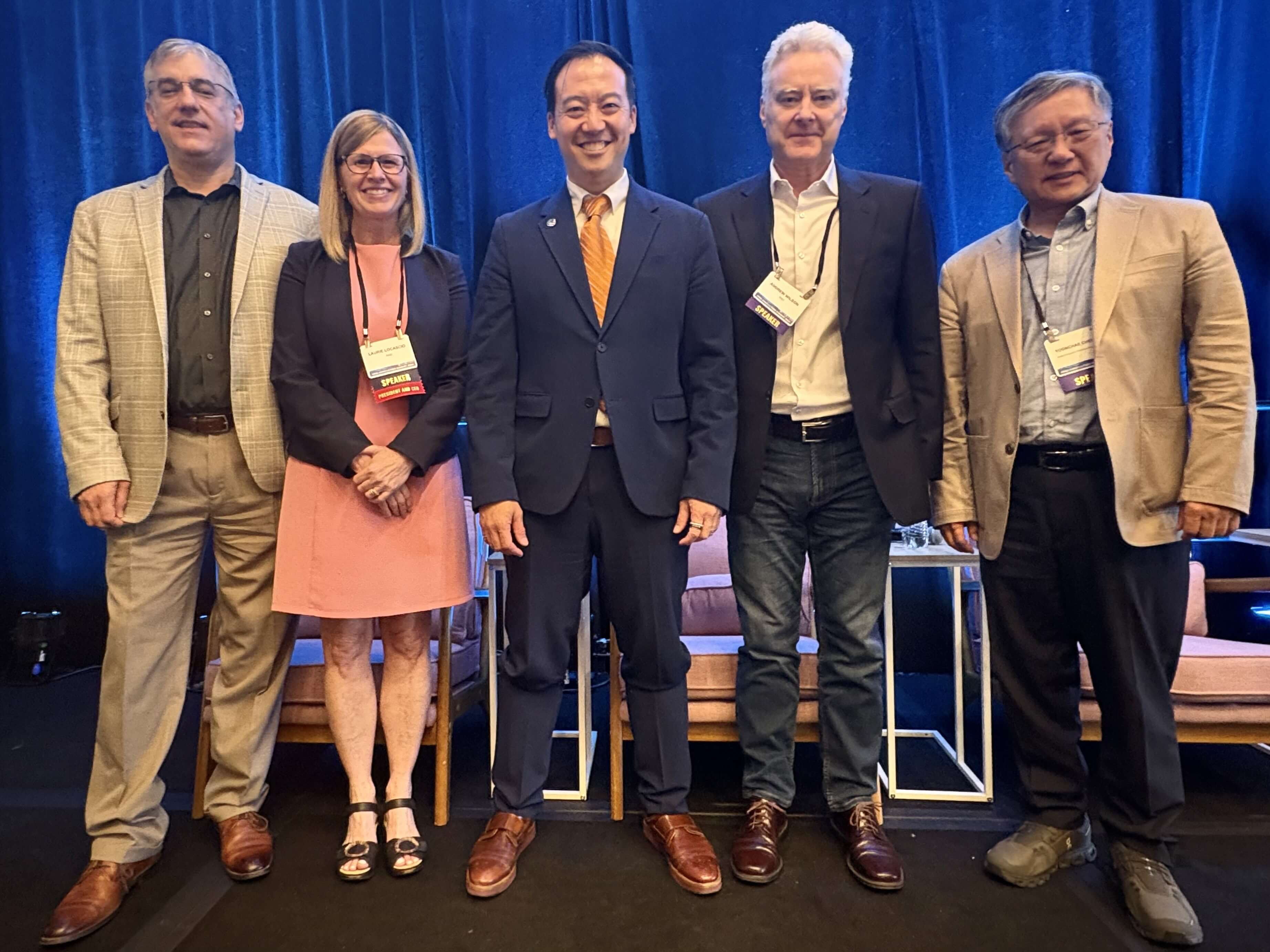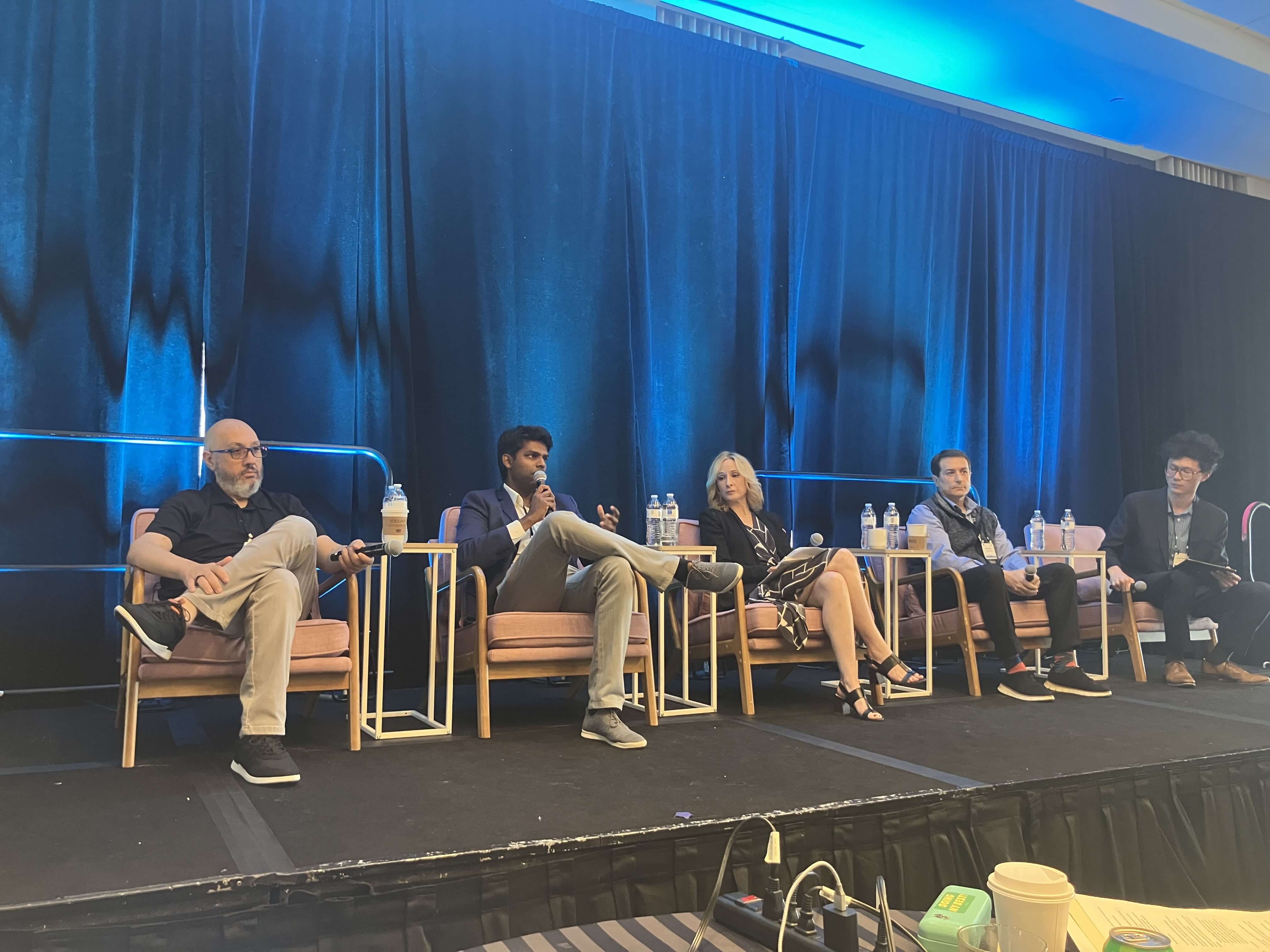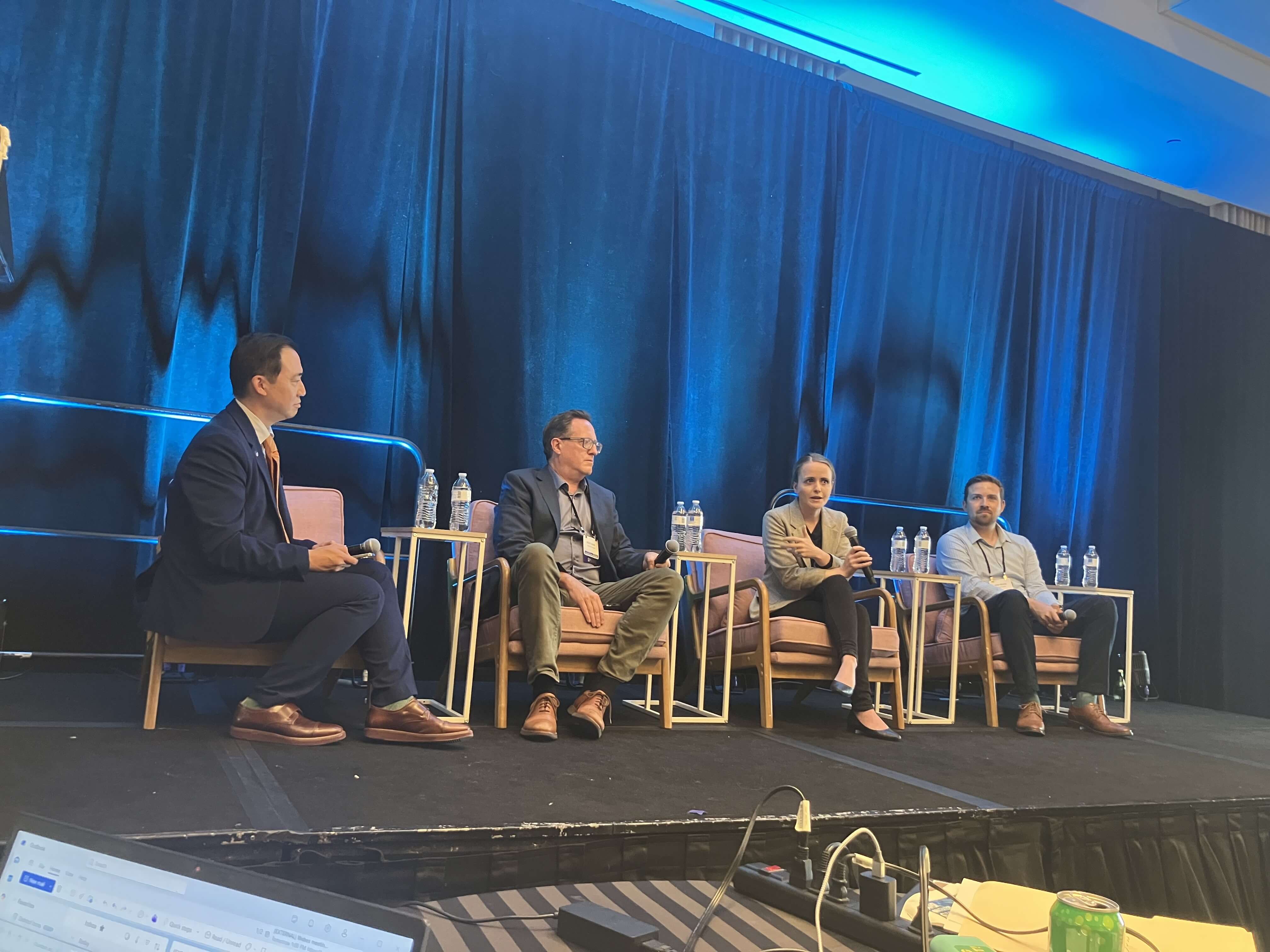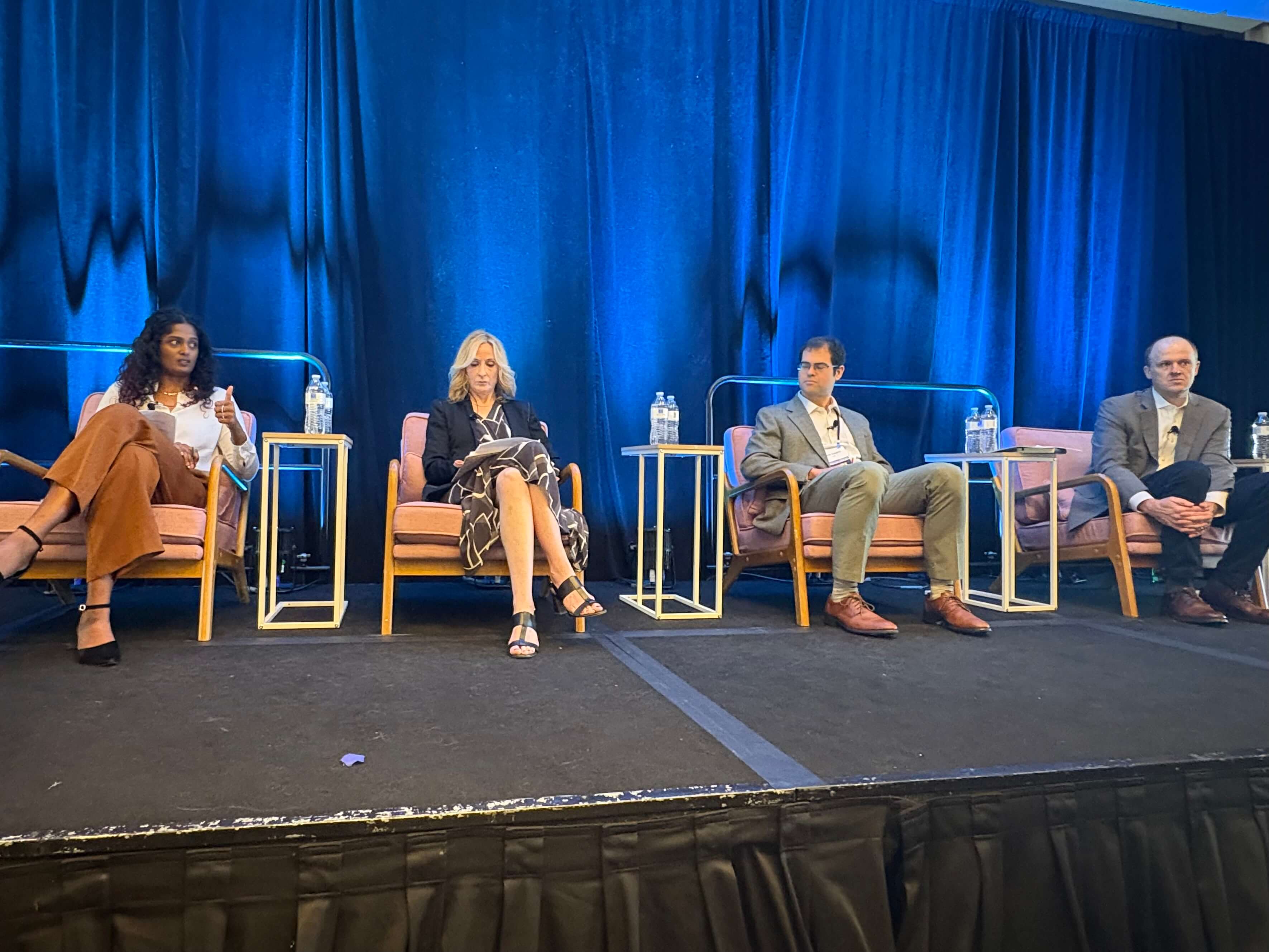


ANSI convened leaders from across the AI and quantum communities on July 29 at the Grand Hyatt Denver for “Accelerating the Digital Economy through AI and Quantum,” part of the 2026 ANSI Innovation Summit. The question at the center of the day: how can standards accelerate—not just govern—the adoption of AI today and prepare industry for the quantum transition ahead?
The day’s discussions pointed toward answers that cut against the assumption that emerging technologies require emerging-from-scratch governance. Frontier AI risk assessment builds on decades of existing practice. Agentic AI calls for a coordinated ecosystem of standards rather than a single new framework. And quantum, now moving from demonstration to delivery, needs standards fast enough to let companies compete on performance rather than claims.
ANSI president and CEO Dr. Laurie E. Locascio opened the day outlining how voluntary, consensus-based standards produced through the industry-led U.S. system are the infrastructure both technologies need to scale:
“Standards are the connective tissue that lets an AI system be evaluated, an agent be governed, a photon source be measured, a quantum device be integrated—so that customers can buy in global markets, capital can flow, and industries can form.”
Recorded remarks from the Honorable John Hickenlooper, U.S. Senator from Colorado, followed.
AI: integrating, not reinventing
Rohit Israni, founder and CEO of Certient AI and chair of AI Standards US (INCITS), delivered opening remarks for the AI program. Craig Schlenoff, Ph.D., chief of the AI Research, Measurement, and Standards Division at the National Institute of Standards and Technology (NIST), followed with a survey of NIST's work on trustworthy AI.
The morning’s discussions established that although frontier AI raises genuinely new questions, risk assessment itself is well-established practice—and much of the standards work ahead lies in integrating AI-specific considerations into governance systems organizations already use. Speakers examined how capability thresholds and threat modeling can substitute for empirical data that does not yet exist, how to write standards at a level of abstraction that will remain durable, and how to modernize conformity assessment for systems that update and retrain over time.
The conversation on agentic AI extended the frame beyond the model itself. Autonomous agents introduce vulnerabilities in the surrounding layers—tools, orchestrators, inter-agent communication—and widen the gap between AI-driven threats and traditional security controls. Panelists pointed toward a coordinated ecosystem of standards, built on the security and compliance programs organizations already run, with agents designed to fail safely. Privacy, identity, and permission across agent chains emerged as areas where current frameworks fall short.
Quantum: from demonstration to delivery
Austin S. Lin, founder and principal of Toffoli Projects and head of the U.S. delegation to ISO/IEC JTC 3, Quantum Technologies, opened the afternoon with a survey of the global quantum standards landscape and moderated both quantum panels.
The first quantum panel made the case for shared foundations that no single company can build alone; collaborative efforts across the standardization community are central to that work. Early industry engagement in standards work is essential if the resulting standards are to reflect real-world needs. International cooperation—illustrated by the U.S.–Korea partnership—and lessons from telecommunications and semiconductors offered a template for timing standards development to the arc of an emerging industry.
The closing panel captured quantum’s current inflection point. The industry is moving from R&D demonstrations to commercial delivery, and standards now determine whether customers can evaluate technologies with confidence and whether companies can compete on performance rather than ambiguous claims. Colorado’s dense quantum ecosystem drew attention as a competitive advantage; speakers also addressed workforce development across the full talent stack, supply chain and manufacturing readiness, and the return on investment early-stage companies see from participating in standards development.
Speakers at the July 29 conference included Yoonchae Cheong, Ph.D. (Korea–U.S. Quantum Technology Cooperation Center); Scott Davis (Vescent Technologies); Jesse Dunietz (NIST); August Gweon (Anthropic); Kyriakos “Rock” Lambros (RockCyber); Troy Leach (Cloud Security Alliance); Kim Lucy (Microsoft); Chris Meserole (Frontier Model Forum); Chris Monroe, Ph.D. (IonQ and Duke University); Cody Moore (Caruso Ventures); Keerthiram Murugesan, Ph.D. (IBM Research); Jessi Olsen (Elevate Quantum); Deepika Raman (Center for Long-Term Cybersecurity, UC Berkeley); and Andrew Wilson, Ph.D. (NIST).
ANSI thanks all speakers and attendees for participating in the AI and Quantum conference.